
| Professor Guan GuiIEEE Fellow,IET Fellow,AAIA Fellow,ACIS Fellow Nanjing University of Posts and Telecommunications, China Guan Gui (Fellow, IEEE) received the Ph.D. degree from the University of Electronic Science and Technology of China, Chengdu, China, in 2012. From 2009 to 2014, he joined Tohoku University as a research assistant as well as a postdoctoral research fellow, respectively. From 2014 to 2015, he was an Assistant Professor at the Akita Prefectural University, Akita, Japan. Since 2015, he has been a professor at Nanjing University of Posts and Telecommunications, Nanjing, China. His recent research interests include intelligence sensing and recognition, intelligent signal processing, and physical layer security. Dr. Gui has published more than 200 IEEE Journal/Conference papers and won several best paper awards, e.g., ICC 2017, ICC 2014 and VTC 2014-Spring. He received the IEEE Communications Society Heinrich Hertz Award in 2021, the Clarivate Analytics Highly Cited Researcher in Cross-Field in 2021-2023, the Member and Global Activities Contributions Award in 2018, the Top Editor Award of IEEE Transactions on Vehicular Technology in 2019. Since 2022, he has been a Distinguished Lecturer of the IEEE Vehicular Technology Society. He is serving or served on the editorial boards of several journals, such as IEEE Transactions on Vehicular Technology, and IEICE Transactions on Communications. In addition, he served as the IEEE VTS Ad Hoc Committee Member in AI Wireless, Executive Chair of IEEE ICCT 2023, Executive Chair of VTC 2021-Fall, and Vice Chair of WCNC 2021. Speech Title: Foundation Models for Radio-Frequency UAV Recognition Abstract:Radio-frequency (RF)-based unmanned aerial vehicle (UAV) recognition is an important technique for low-altitude surveillance and spectrum monitoring. However, conventional deep-learning approaches are typically developed under closed-set assumptions and often suffer from limited generalization when encountering new UAVs, devices, or environments. Recent advances in large language models (LLMs) and foundation models provide new opportunities for RF signal understanding and intelligent UAV recognition. This talk will introduce recent progress in LLM-empowered RF UAV recognition, including RF representation learning, signal-semantic alignment, few-shot adaptation, open-set recognition, and knowledge-enhanced reasoning. Particular attention will be given to the transition from closed-set classification toward open-world RF intelligence, where systems are expected to recognize known UAVs, detect unknown emitters, and adapt to new environments. Finally, key challenges and future directions in RF foundation models, cross-domain generalization, continual learning, and lightweight deployment will be discussed. |
 | Professor Guangjie HanIEEE Fellow, IET/IEE Fellow, AAIA Fellow Hohai University, China Guangjie Han is a professor, currently serving as the Dean of the School of Information Science and Engineering at Hohai University. He is an IEEE Fellow, IET/IEE Fellow, and AAIA Fellow. His main research interests include smart oceans, industrial IoT, artificial intelligence, networks, and security. In recent years, he has published more than 300 high-level SCI journal papers, including over 160 papers in the IEEE/ACM Trans. series, in international journals such as IEEE JSAC, IEEE TMC, IEEE TPDS, and IEEE TCC. His publications have been cited over 26300 times on Google Scholar, with an H-index of 84. He has authored three monographs and translated one book. He has led more than 30 provincial and ministerial-level research projects, including national key R&D programs and national natural science foundation key projects. He has been granted 130 national invention patents and 6 PCT international authorized patents. He has received numerous awards, including the second prize of the China Business Federation Science and Technology Award, the third prize of the Jiangsu Provincial Science and Technology Award, the second prize of the Liaoning Provincial Science and Technology Progress Award, and the Best Paper Award of the IEEE Systems Journal in 2020. For seven consecutive years (2019-2025), he has been listed as one of the top 2% of scientists globally, as well as for the Chinese Highly Cited Researchers list for six consecutive years (2020-2025). Currently, he serves as an associate editor for more than ten international journals, including IEEE TII, IEEE TCCN, IEEE TVT and IEEE Systems. Speech Title: Underwater Multi-Agent Embodied Intelligence Networks: Research Progress and Perspectives Abstract: Rapid advances in embodied intelligence are driving underwater intelligent systems from single-agent autonomy toward collective embodied intelligence. Underwater multi-agent systems, such as autonomous underwater vehicle (AUV) clusters, need to continuously sense the ocean environment, learn and make decisions, coordinate through networks, and interact with the physical world. These capabilities form a closed loop of sensing, learning, decision-making, coordination, and action. This loop supports the autonomous execution of complex underwater missions. However, underwater multi-agent systems face many challenges due to the complex ocean environment, limited underwater communication, uncertain sensing, scarce interaction data, changing cluster sizes, and environmental disturbances. These challenges affect embodied perception, efficient learning, scalability, multi-agent coordination, and robust control. To address these challenges, this talk introduces the concept of underwater multi-agent embodied intelligence networks. It considers agents, communication networks, and the ocean environment as parts of a coupled system. Network connections support information exchange, knowledge sharing, and coordinated actions among agents. Embodied interactions further support the emergence and development of collective intelligence. Based on our laboratory's recent research, this presentation reviews advances in embodied perception, efficient embodied learning, scalable embodied decision-making, networked embodied coordination, and robust embodied control for underwater multi-agent systems. This presentation aims to provide a new research perspective on underwater multi-agent systems. It revisits the connections among underwater sensing, communication, learning, decision-making, and control. It also explores how networks and intelligence can be closely integrated to develop underwater collective embodied intelligence. The goal is to support the development of a smart ocean with autonomous sensing, cognition, coordination, and action. |
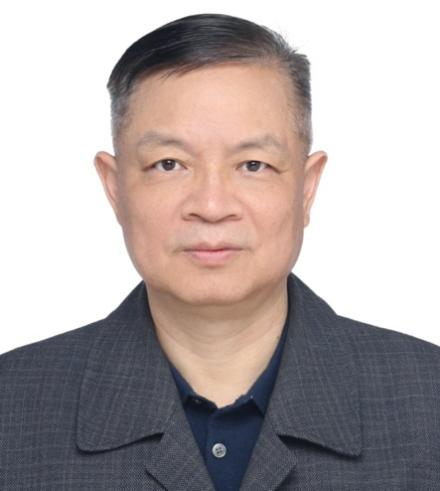 | Professor Ying TanPeking University, China Tan Ying, a native of Yingshan, Sichuan Province, PhD in Engineering. He is currently a Professor and Doctoral Supervisor at Peking University, the inventor of the Fireworks Algorithm (FWA), a Member of the National Academy of Artificial Intelligence (NAAI), and an AAIS Fellow, electee of the 100-Talents Program of the Chinese Academy of Sciences in 2005. His previous academic appointments include Professor at Kyushu University (Japan), Senior Research Scientist at Columbia University (USA), Professor at the University of Science and Technology of China, Research Fellow at the Chinese University of Hong Kong, Professor, Doctoral Supervisor, and Director of the Institute of Intelligent Systems at Electronic Engineering University. His core research interests cover intelligent science, computational intelligence and swarm intelligence, machine learning, big data mining and analytics, as well as their applications in information security, Fintech and related fields. He has presided over more than 30 national-level scientific research projects. He has authored over 20 academic monographs, including Fireworks Algorithm (published by Springer), GPU-based Parallel Implementation of Swarm Intelligence Algorithms (Morgan Kaufmann – Elsevier), and Introduction to Fireworks Algorithm (Science Press). He has also edited 80+ volumes of Springer-Nature LNCS conference proceedings as an Editor-in-Chief. He has published over 450 academic papers and received more than 10 Natural Science Awards at national, Ministry of Education and Beijing municipal levels. He holds over 12 authorized international and national invention patents, together with numerous Best Paper Awards. He serves as Editor-in-Chief, Associate Editor and Editorial Board Member for more than a dozen international journals. He founded and chairs the International Conference on Swarm Intelligence (ICSI), and has acted as General Chair for over 50 international conferences and symposia. He serves as President of the International Society for Swarm and Evolutionary Intelligence, and acts as a review panel expert for multiple international and national science foundations and award programs. Speech Title: The Progress of Fireworks Algorithm (FWA) & Its Applications Abstract:Inspired from the collectivebehaviors of many swarm-based creatures in nature or socialphenomena, swarm intelligence (SI) has been received attention and studied extensively, gradually becomes a class of efficiently intelligent optimization methods.Inspired by fireworks’ explosion in air,the so-called fireworks algorithm (FWA) was proposed in 2010.Since then, many improvements and beyond were proposed to increase the efficiency of FWA dramatically, furthermore, a variety of successful applications were reported to enrich the studies of FWA considerably. Inthistalk, the novel swarm intelligence algorithm, i.e., fireworks algorithm, is briefly introducedand reviewed, thenseveraleffectiveimprovedalgorithms arehighlighted,individually. In addition,the multi-objective fireworks algorithm and the graphic processing unit (GPU) basedFWAare alsobrieflypresented, particularly the GPU-basedFWA is able to speed up the optimizationprocess extremely. Extensive experiments onbenchmark functions demonstrate that the improvedalgorithms significantly increase the accuracy of found solutions, yet decrease the running timesharply.Finally, several typical applications ofFWA, in particular, for big-dataapplication, are presented in detail.
|
| Professor Weijia JiaIEEE Fellow Beijing Normal University/BNBU, Zhuhai, China Professor Weijia Jia (IEEE Fellow) is currently the Director of Institute of Artificial Intelligence and Future Networking, and Super Intelligent Computer Center, Beijing Normal University (BNU, Zhuhai); also a Chair Professor at BNBU(UIC), Zhuhai, Guangdong, China. His contributions have been recognized for the research of edge AI, optimal network routing and deployment; vertex cover; anycast and multicast protocols; sensors networking; knowledge relation extractions; NLP and intelligent edge computing. He has over 800 publications in the prestige international journals/conferences and research books and book chapters. He has received the best product awards from the International Science & Tech. Expo (Shenzhen) in 2011/2012 and the 1st Prize of Scientific Research Awards from the Ministry of Education of China in 2017 (list 2), 1st Prize of Shanghai Science and Technology Award (2025, list 4);2025 China Industry-University-Research Collaboration Innovation Awardand top 2% World Scientists in Stanford-list (2020-2026). Speech Title: Open-Loop Agent Tabular QA Abstract:The advancement of large language models (LLMs) has enhanced tabular question answering (Tabular QA), yet they struggle with open-domain queries exhibiting underspecified or uncertain expressions. To address this, we introduce Open-Loop Agent QA system that composes of agent workflows with comprehensive benchmark to tackle with open tabular for real estate: (1) a large-scale benchmark with 5K tables and 75K QA pairs; a fine-grained labeling scheme for detailed evaluation; and (2) a dynamic clarification interface that simulates user feedback for interactive assessment. We also propose a multi-agent framework that excels at detecting ambiguities, clarifying them through dialogue, and refining answers; (3) A large-scale instances featuring machine-verifiable supervision for intermediate steps, including structured intent labels, SQL queries, and API calls. We propose a hierarchical agent framework instantiating an under-stand–plan–execute architecture as a strong baseline. By orchestrating a Front-end parser, a planning Supervisor, and execution Specialists, hierarchical-agent effectively integrates heterogeneous evidence. Extensive experiments demonstrate that hierarchical-Agent constitutes a strong baseline and substantiates the necessity of hierarchical collaboration for complex, real-world reasoning tasks. |

